Protect Your Cervical Health with Routine Screening
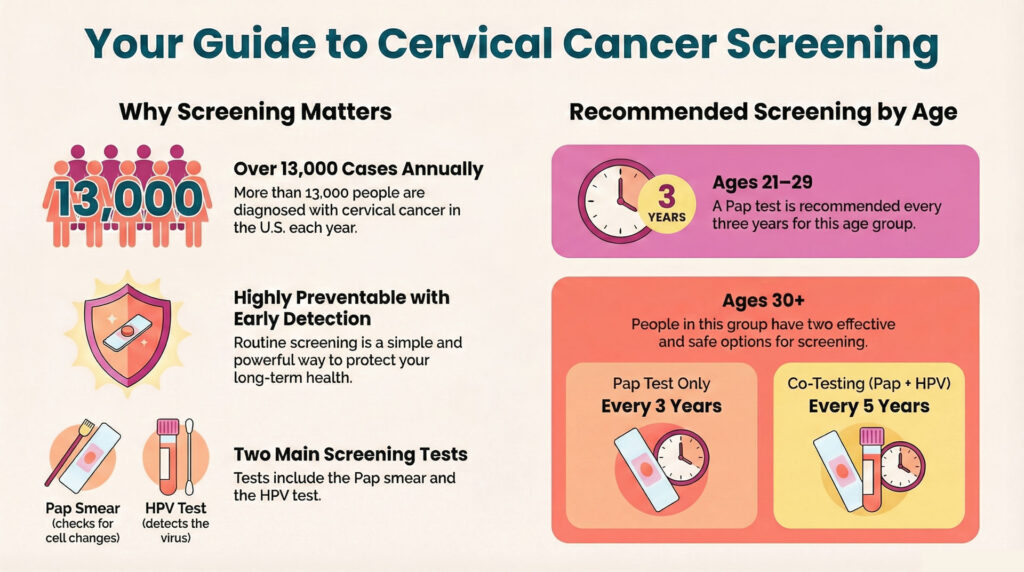
More than 13,000 people assigned female at birth are diagnosed with cervical cancer each year in the United States. The good news: This type of cancer is highly preventable with routine screening and early detection. Below, find out who’s at risk, when to screen, and ways to stay proactive about your cervical health.
What Is Cervical Cancer?
Cervical cancer begins when abnormal cells in the cervix grow out of control. (The cervix, the lower, narrow end of the uterus, plays a vital role in reproductive health.) The leading cause of the disease is persistent infection with high-risk types of Human Papillomavirus (HPV). HPV is a common virus that most sexually active people will be exposed to at some point. Typically, the virus goes away on its own—but if it doesn’t, it can develop into cervical cancer over time.
A key prevention tool is the HPV (Gardasil) vaccine, which protects against the high-risk HPV types most likely to cause cervical cancer. Vaccination is recommended beginning at ages 11–12 and can be given through age 26, with shared decision-making for adults 27–45.
Screening Options
There are two main screening tests that can help prevent cervical cancer or find it early.
Pap Smear (Pap Test)
Cells from the cervix are collected and examined under a microscope for precancers or cell changes. It’s a quick, highly effective way to spot early warning signs.
HPV Test
This test also looks at cells taken from the cervix in order to detect cell changes and the DNA of high-risk HPV.
Screenings can now also be done using FDA-approved self-collection methods. Options include HPV self-collection in healthcare settings and the Teal Wand for home collection. These approaches help bridge care gaps for individuals who face barriers to traditional cervical cancer screening.
What to Expect
The entire exam usually takes 10 to 20 minutes. The Pap smear portion lasts only a few minutes. Most people find it painless, although you may feel some pressure, and light spotting afterward is normal.
Screening Recommendations by Age
Depending on your age, you’ll need one or both tests (Pap and HPV).
Ages 21–29
For cervical cancer screening ages 21–29, a Pap test is recommended every three years. HPV testing is not routinely recommended for those in this age group (unless follow-up is needed).
Ages 30+
People in this group have options, both of which are safe and effective:
- Continue with a Pap test every three years
- Choose co-testing (Pap + HPV), which allows you to complete a Pap and HPV test every five years
Take the First Step
As one of the most preventable diseases, staying on schedule with cervical cancer screenings is an easy and powerful way to protect your long-term health.
Reach out to your Care Team today to determine what makes the most sense for you.