Let us partner with you on your journey to better mental health
At Crossover, we do more than provide our members with personalized care from an interdisciplinary care team. We also empower you to sustain good health by offering practical tools and skills that educate and motivate. From clearing up myths about mental health to the best tips and tricks for navigating your life and relationships, check this page often for useful content written by our dedicated mental health providers, just for you.

Is It Stress or Anxiety? How to Know the Difference
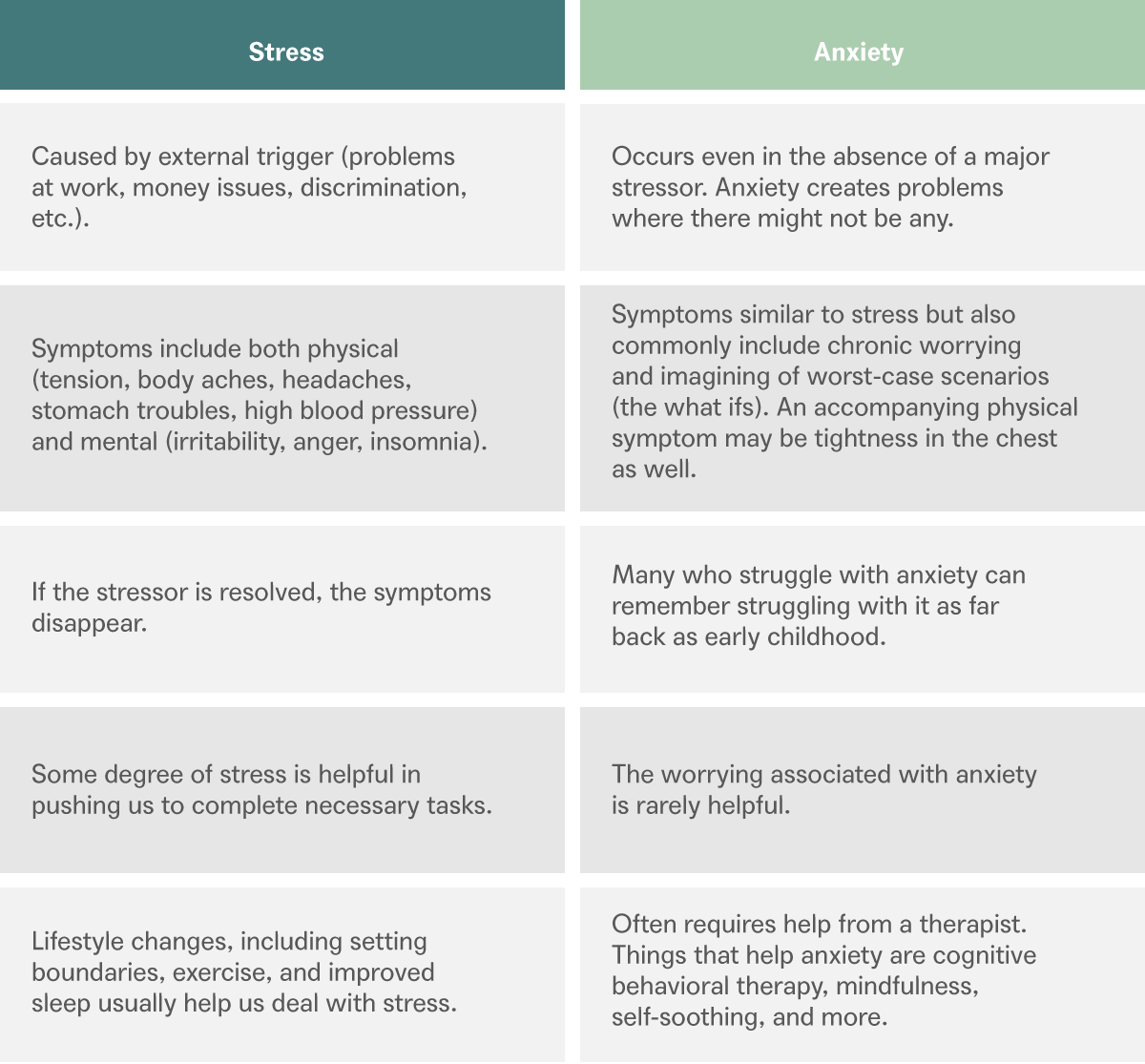
The words stress and anxiety are often used interchangeably, but they’re different and should be addressed in different ways.
Stress—pressure or tension that arises when we face a challenge or demand—is a reality of everyday life. Anxiety brings ongoing unease, fear, and worry that can affect the physical body in many ways.
This table compares stress and anxiety and can help you determine if you’re suffering from one or the other, or both.
Intro to Therapy
It’s common to feel unsure (and maybe even overwhelmed) before starting therapy for the first time.
- How do you know if you need therapy?
- What happens in a session?
- Which type of provider should you see?
In the four-part video series, our Mental Health Program Manager, Michael Boroff, answers commonly asked questions, including:
- When to seek therapy
- What you can expect in a therapy session
- How to figure out which type of therapist is right for you
Journaling Prompts

Journaling can help you get clear on your thoughts and feelings, and it’s something anyone can do at any time—all you need is a few minutes and a notebook, tablet, or smartphone.
If you’re searching for inspiration for how to get started, here are some journaling prompts to help you begin. You can write as much or as little as you want in response to each prompt, and remember, there’s no “right way” to journal—just give it a try and see how you feel. Let the writing begin!
If you feel like you’re suffering from stress or anxiety—or both—Crossover can help. Schedule a behavioral health screening today.